Tracing Community Knowledge Sharing in Niche Online Poker Forums and Its Effect on Strategy Evolution
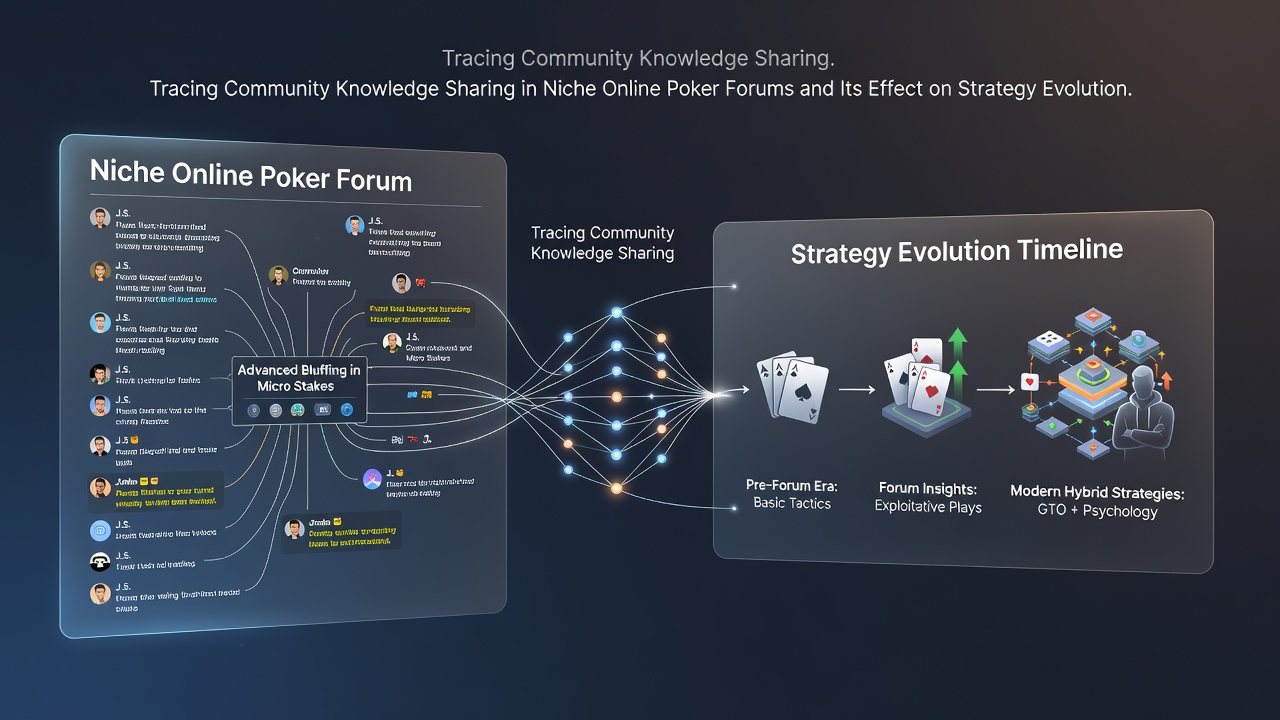
Online poker forums that focus on specific player pools or game variants have operated as structured repositories for years, where participants post hand histories, discuss range construction, and refine concepts through iterative replies; these platforms connect players across time zones and skill levels, creating documented trails of idea exchange that researchers trace through archived threads and timestamped posts.
Mechanisms of Knowledge Exchange in Specialized Communities
Participants in these forums upload detailed hand breakdowns using equity calculation tools and solver outputs, while others respond with counterexamples drawn from their own session data, and the resulting threads compile multiple viewpoints into evolving consensus points that later appear in broader strategy resources. Moderators enforce tagging systems and thread categories that separate preflop theory from river decision trees, allowing new members to locate prior discussions without duplication, and data from forum analytics indicate higher engagement rates in sub-forums dedicated to emerging formats such as fast-fold tournaments or mixed-game rotations.
Pathways from Forum Discussion to Strategy Shifts
Early threads on niche sites often introduce concepts like adjusted continuation betting frequencies against particular population tendencies, and repeated citations across months show these frequencies migrating into shared spreadsheets and training videos that circulate outside the original forum. Observers note that collective review of large sample sizes posted by multiple contributors accelerates identification of leaks that individual players might miss, while cross-referencing with public database exports reveals measurable changes in aggregate statistics for regulars who participate actively in such exchanges.
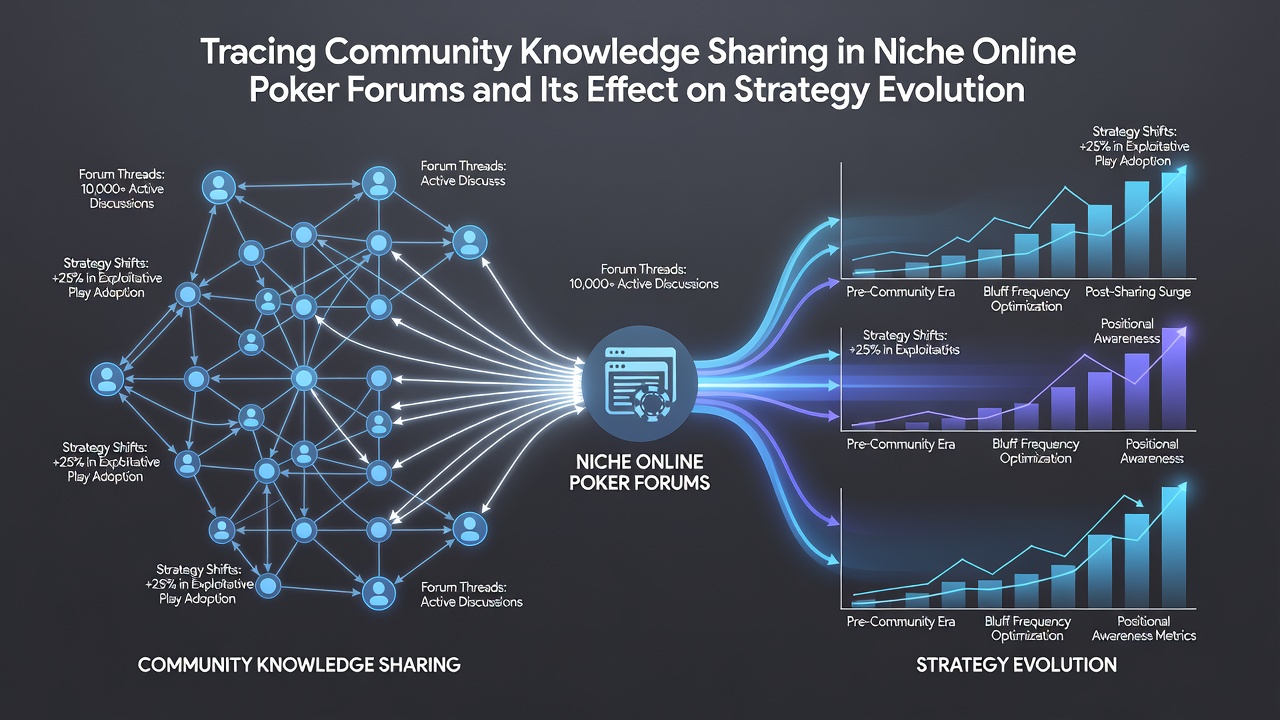
By July 2026 several long-running threads had documented transitions from static preflop charts to dynamic solver-derived ranges tailored for specific rake structures, and participants tracked these updates through versioned attachments that recorded each adjustment with accompanying reasoning from multiple contributors. Academic examinations of similar online knowledge networks, including one conducted at the Simon Fraser University in Canada, demonstrate how repeated exposure to peer-reviewed critiques within closed communities correlates with faster adoption of balanced lines compared with isolated study methods.
Regional and Variant-Specific Forum Influences
Forums centered on Asian time-zone cash games frequently share population reads tied to recreational player tendencies during peak hours, and these localized insights have influenced broader discussions when participants from other regions cross-post anonymized data sets. In contrast, European micro-stakes communities emphasize bankroll progression models linked to variance calculations derived from shared session logs, producing reference documents that later inform regional training programs. A report from the Australian Gambling Research Centre highlights parallel patterns in virtual card rooms where forum-mediated feedback loops shorten the interval between concept introduction and widespread implementation among tracked player cohorts.
Documentation and Traceability of Evolving Concepts
Forum software preserves edit histories and reply chains that allow later analysts to map when specific adjustments first surfaced, such as multiway pot defense frequencies or blocker-based river bluff selections, and these timelines align with recorded changes in public database leaderboards for users who cite the same threads. Researchers compile these traces into network graphs that illustrate how central contributors accelerate diffusion of new ideas across sub-forums, while peripheral participants adopt refinements at lower rates yet still contribute incremental examples that refine the original proposals.
Conclusion
Archival analysis of niche poker forums reveals consistent patterns where structured discussion threads serve as catalysts for incremental strategy updates that propagate beyond their original participants, supported by timestamped records and cross-referenced performance data from multiple regions. Continued monitoring of these platforms provides measurable indicators of how collective input shapes individual decision frameworks over successive years.