The Hidden Legacy of Mid-Century Poker Manuals in Shaping Bankroll Discipline for Today's Micro-Stakes Online Grinders
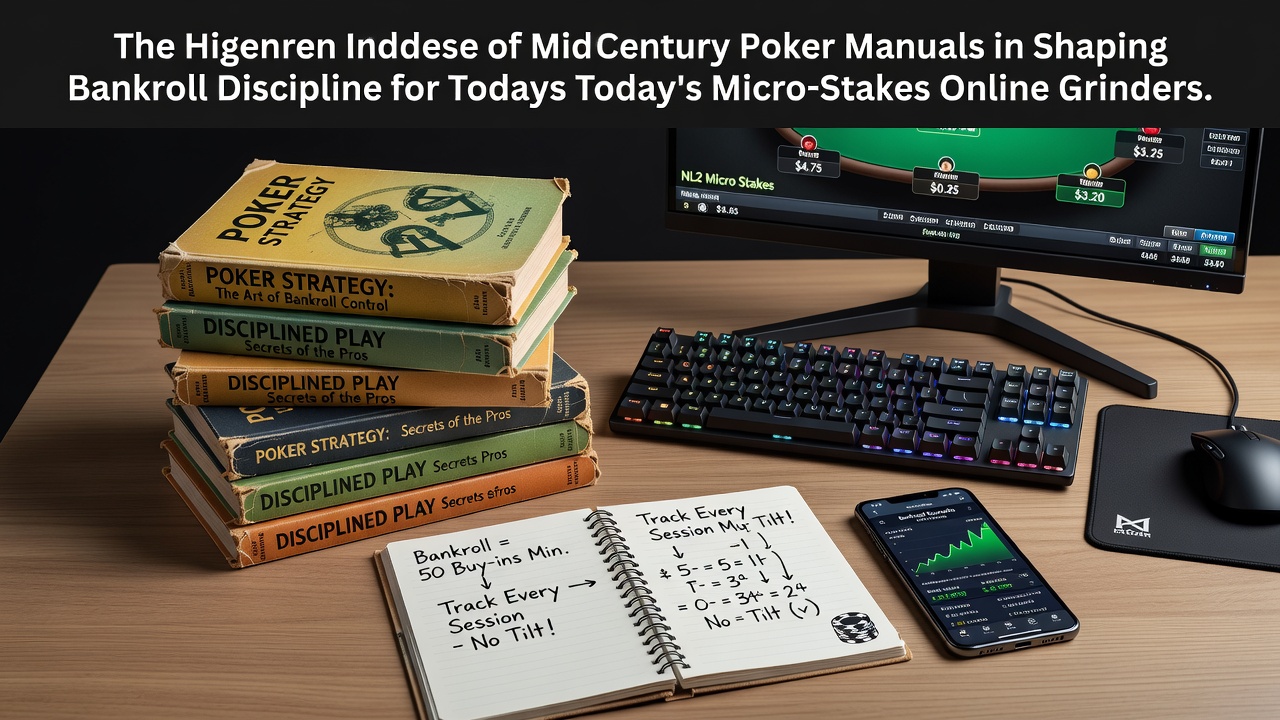
Mid-century poker manuals from the 1950s and 1960s laid out strict guidelines for money management that continue to influence how micro-stakes players handle their bankrolls in online games today, and those early texts stressed playing only with funds one could afford to lose while maintaining separate reserves for daily expenses. Researchers who examined these works note that authors like Herbert Yardley in his 1957 book emphasized tracking every session result and avoiding the temptation to chase losses, principles that mirror current practices among online grinders who use spreadsheets and apps to monitor variance over thousands of hands.
Core Principles from Early Texts
Manuals published between 1940 and 1965 repeatedly advised readers to calculate a playing bankroll as a multiple of the typical buy-in, often recommending at least twenty to thirty buy-ins before entering any game, and this structure appears in works aimed at both casual home games and emerging casino scenes across the United States. Data from historical gaming archives shows that these recommendations arose after widespread observations of players losing homes or savings during losing streaks, leading writers to frame bankroll discipline as a survival skill rather than an optional tactic. Observers note that such rules carried over into later decades because they produced measurable reductions in bust rates when followed consistently.
Adaptation in Digital Micro-Stakes Environments
Today's micro-stakes online players, many of whom compete at tables with blinds as low as one cent and two cents, apply the same multiple-buy-in framework while adjusting for the higher volume of hands dealt per hour in virtual rooms, and software tools now automate the tracking that mid-century authors performed with pencil and paper. Figures from industry reports indicate that grinders who maintain at least fifty buy-ins in their online accounts experience fewer forced withdrawals during downswings, echoing the conservative ratios printed in older manuals. What's interesting is how these digital practitioners often cite the same warnings against dipping into rent money that appeared in 1950s publications, even though the stakes involve fractions of a dollar rather than physical chips at a brick-and-mortar table.

Training platforms used by emerging-market players in regions such as Southeast Asia and Eastern Europe incorporate excerpts from these classic texts into their onboarding modules, and participants who complete those modules demonstrate steadier session lengths according to platform analytics released in early 2026. The continuity becomes clear when one compares session logs: players who reference historical bankroll formulas report fewer impulsive deposits than those who rely solely on modern short-term win-rate metrics.
Evidence from Contemporary Studies
A 2024 report issued by the Canadian Centre on Substance Use and Addiction examined self-reported bankroll strategies among online poker participants and found that individuals familiar with pre-1970 strategy literature maintained larger reserves relative to average buy-in size than peers who learned exclusively through video content. That study also noted lower rates of account depletion among the historically informed group during periods of elevated variance. In June 2026 several European poker forums hosted discussions linking these older texts to responsible gaming guidelines promoted by the Malta Gaming Authority, where moderators shared digitized scans of mid-century chapters that addressed emotional control during losing periods.
University researchers in Australia have begun cross-referencing old manual advice with data from major online poker networks, and preliminary results suggest that adherence to the twenty-buy-in minimum correlates with longer player retention rates across micro-stakes cash games. Those findings align with patterns first documented in 1960s Nevada gaming commission records that tracked voluntary player exits after bankroll breaches.
Practical Carryover for Current Grinders
Micro-stakes specialists who study these manuals often translate the original language into spreadsheet formulas that flag when a bankroll drops below the recommended threshold, triggering automatic session limits or table downgrades, and this method prevents the cascade of reloads that older authors warned against. Case examples shared in player communities describe grinders who avoided total wipeouts during 2025 downswings precisely because they followed the reserve-separation rule printed decades earlier. The approach also extends to tournament satellites, where mid-century guidance on treating entry fees as non-recoverable expenses helps players set strict monthly budgets without emotional attachment to results.
Conclusion
Historical poker manuals continue to supply the foundational logic for bankroll discipline that micro-stakes online players implement through contemporary software and community resources, and the measurable outcomes in retention and loss prevention demonstrate that those mid-century frameworks remain operational in digital environments. Continued examination of both archival texts and current player data will clarify how these principles evolve alongside changes in game speed and stake structures.