How Sound Design in Poker Training Simulators Shapes Auditory Memory Cues for Live Final Table Participants
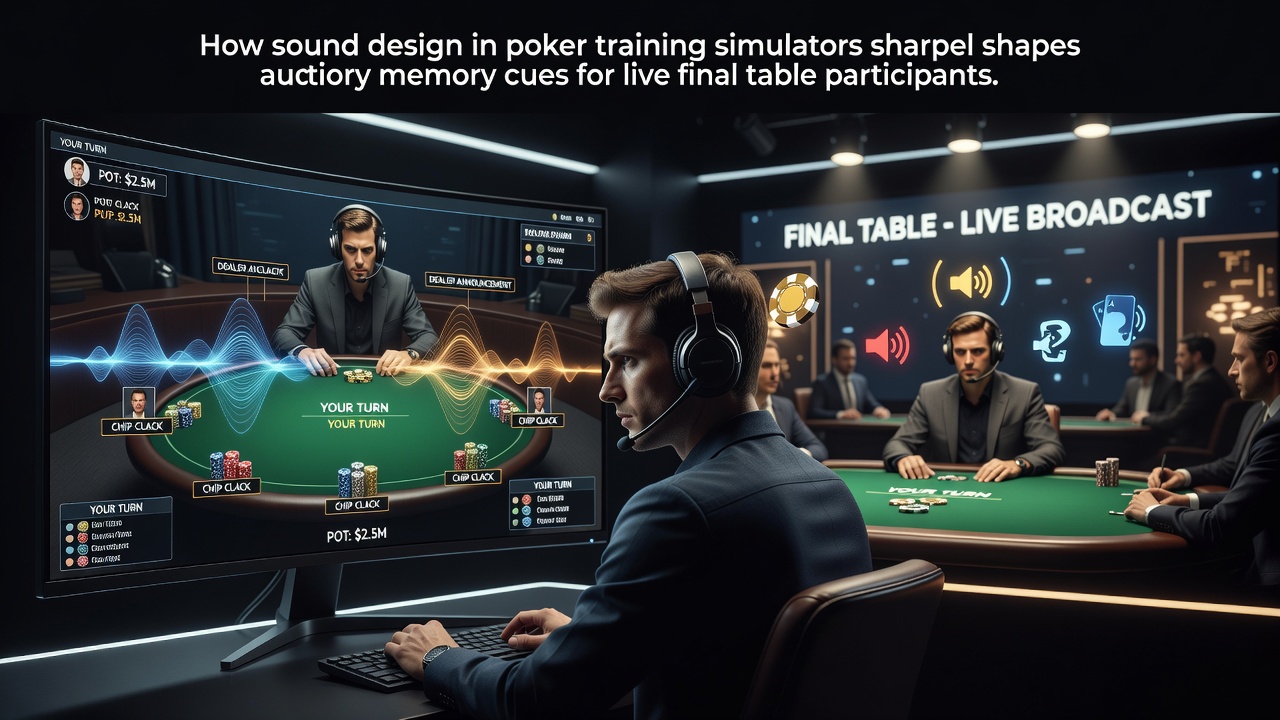
Sound design in poker training simulators incorporates layered audio elements such as chip clacks, card shuffles, crowd murmurs, and timed alerts that align with decision points during simulated hands. These elements create repeatable auditory patterns that players encounter repeatedly across practice sessions. Research from the National Institutes of Health shows that consistent auditory stimuli strengthen associative memory links between specific sounds and required actions like bet sizing or fold decisions.
Simulators developed by major platforms integrate these cues through procedural audio engines that adjust volume, pitch, and timing based on hand strength indicators or opponent modeling data. Players interact with virtual tables where each action triggers distinct sound sequences that mirror elements found in live casino environments. Data collected from user logs in 2025 indicate that sessions exceeding 90 minutes produce measurable improvements in response times when the same audio triggers reappear in subsequent drills.
Building Auditory Associations Through Repetition
Training modules present scenarios in which ambient noise layers increase during high-pressure moments such as river decisions or all-in confrontations. This approach draws from established principles in cognitive psychology where repeated exposure to contextual sounds enhances recall accuracy under stress. Observers note that participants who complete 40 or more simulator hours demonstrate faster recognition of auditory patterns when transitioning to live events.
Developers calibrate these systems using frequency ranges that fall between 200 and 5000 Hz to match typical casino acoustics while avoiding listener fatigue. Chip handling sounds receive particular attention because they occur most frequently and carry distinct timbres depending on stack depth or movement speed. Studies conducted at the University of Sydney in 2024 recorded brainwave responses showing elevated theta activity when subjects matched simulated sounds to corresponding strategic choices.
Transfer Mechanisms to Live Final Tables
Final table participants who trained with advanced audio simulators report that familiar sounds trigger automatic recall sequences during actual tournament play. Tournament organizers in June 2026 at several major circuits began incorporating standardized audio equipment that aligns more closely with simulator outputs, allowing players to experience reduced cognitive load when processing table sounds. This synchronization occurs because the training software replicates the acoustic properties of dealer announcements, railbird reactions, and electronic displays used at featured tables.
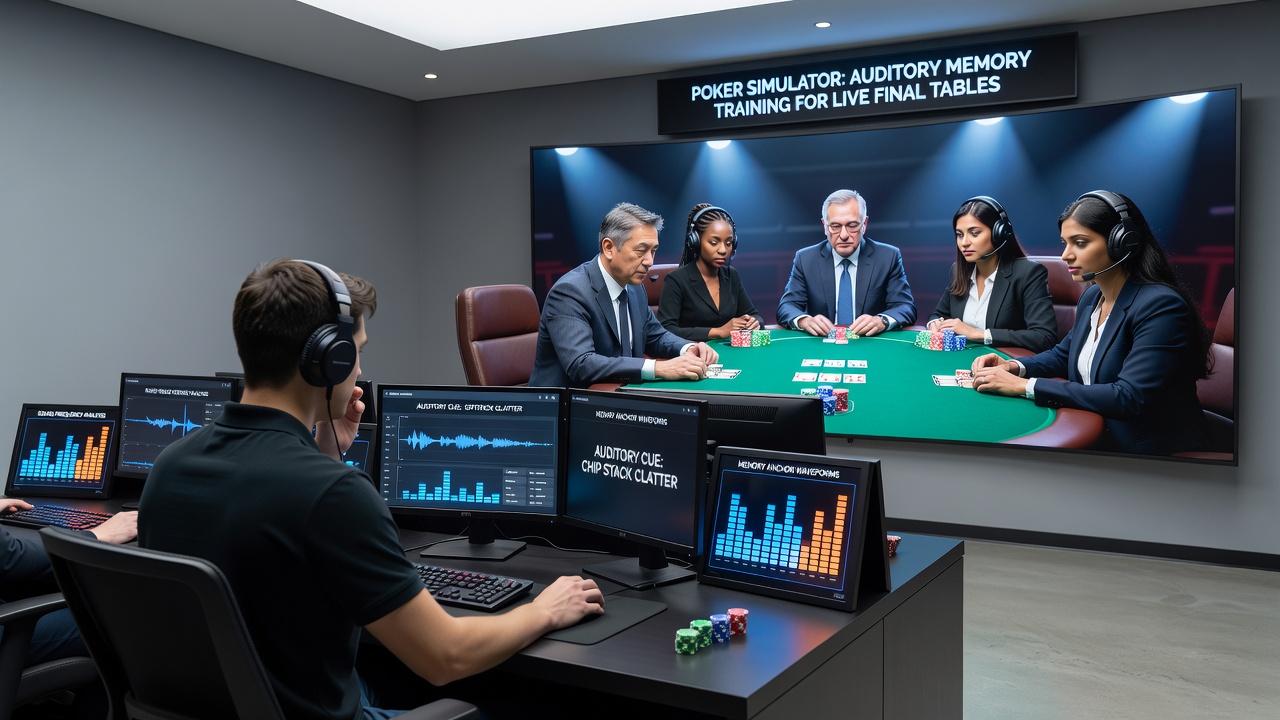
Memory consolidation happens through spaced repetition schedules embedded in simulator software that space out high-intensity audio drills across multiple days. Participants receive progress metrics that track accuracy rates when responding to isolated sound cues without visual information. European Research Council reports from 2025 document that individuals maintaining 85 percent accuracy in audio-only tests show improved performance metrics in subsequent live sessions measured by hand win rates and decision consistency.
Technical Implementation in Current Platforms
Current simulator versions employ middleware that separates background tracks from foreground action sounds so each can be adjusted independently during practice. Headphone output modes simulate directional audio that mimics the spatial arrangement of players around a physical table, training users to locate sound sources without visual confirmation. Software updates released in early 2026 added customizable EQ settings that allow users to emphasize frequencies associated with specific tournament venues.
Analytics dashboards within these platforms record how quickly players react to sound-triggered prompts across different blind levels and stack sizes. Aggregated figures reveal that reaction times decrease by an average of 1.2 seconds after 25 hours of targeted audio training when compared against baseline measurements taken at the start of practice cycles. Platform providers collaborate with audio engineers to ensure that new cue variations remain distinguishable while preserving core associative elements.
Measurement and Validation Approaches
Independent testing facilities evaluate simulator effectiveness by comparing pre-training and post-training performance in controlled live environments. Participants undergo sessions where auditory distractors are introduced to assess whether learned cues maintain their influence under competing noise conditions. Results compiled by Canadian research groups in 2025 show retention rates above 70 percent for sounds practiced at least three times weekly over an eight-week period.
Professional circuits have begun requesting data summaries from training providers to better understand how audio conditioning correlates with final table longevity. These summaries track metrics such as fold frequency following specific sound patterns and average time spent in the tank when familiar cues appear. Tournament directors note that players who document simulator usage demonstrate more stable decision patterns during extended final table play that stretches past midnight.
Conclusion
Sound design elements integrated into poker training simulators establish durable auditory memory pathways that participants carry into live final table situations. Technical refinements continue to align simulator outputs with real-world acoustics through frequency matching and spatial audio techniques. Data accumulated across multiple research initiatives and platform analytics indicate measurable transfer effects when players maintain consistent training schedules. These developments reflect ongoing collaboration between audio specialists, cognitive researchers, and tournament organizers seeking to optimize performance conditions at the highest levels of competition.