Cultural Nuances Driving Variations in Betting Patterns Within Global Virtual Poker Networks

Virtual poker networks connect participants across continents each day, and betting patterns within those networks reflect distinct cultural influences that shape how players approach risk, aggression, and decision timing. Data from major platforms shows measurable differences in bet sizing, bluff frequency, and continuation rates that align with regional backgrounds rather than random variation.
Regional Risk Tolerance and Bet Sizing Trends
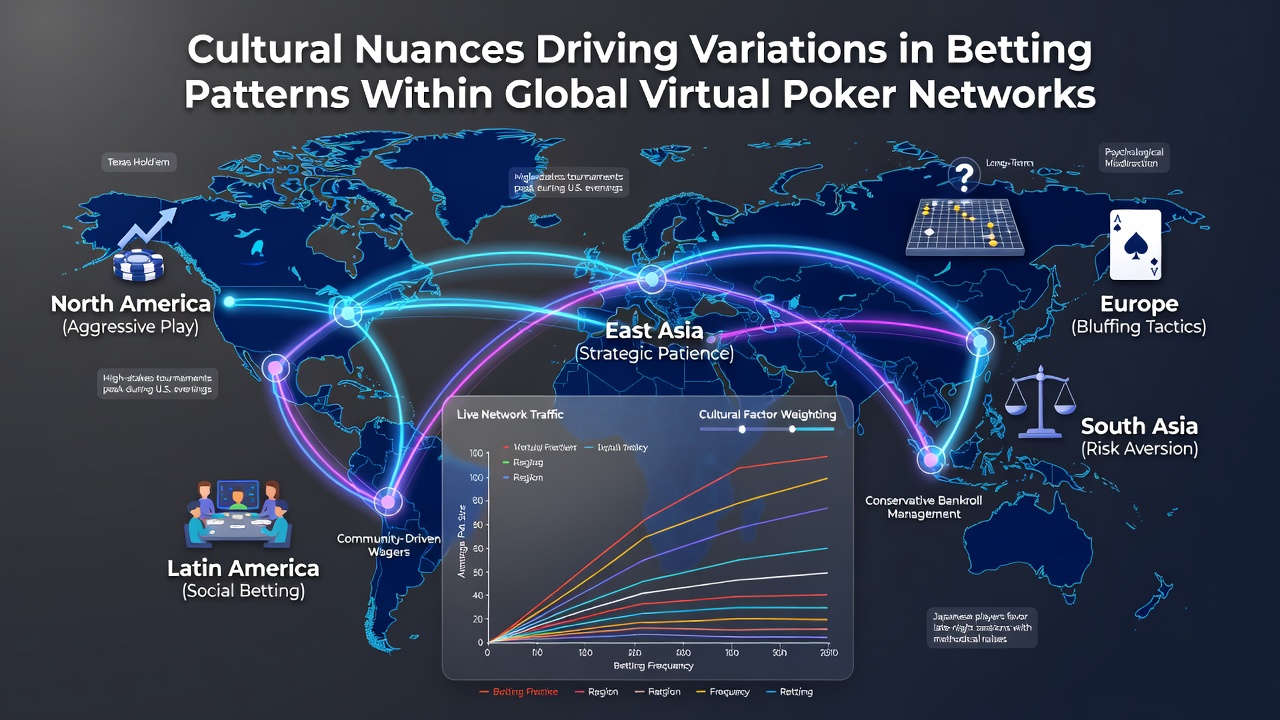
Players originating from East Asian markets often display tighter preflop ranges combined with larger postflop bets when they enter pots, according to aggregated hand histories reviewed by platform analysts in 2025. These patterns appear consistent across multiple networks and persist even after players relocate to different time zones. European participants, by contrast, show higher frequencies of small-ball betting early in tournaments, with gradual escalation as blinds increase.
North American players contribute elevated three-bet percentages in cash games hosted on the same sites, yet their aggression tends to cluster around specific hours that match domestic evening schedules. Observers tracking these metrics note that such timing preferences create identifiable clusters within the overall data stream each month.
Communication Styles and Table Dynamics
Chat box activity varies sharply by region as well. Participants from Latin American countries engage in longer conversational exchanges during hands, and this activity correlates with slightly higher calling ranges in multiway pots. Australian and New Zealand players maintain shorter chat interactions yet demonstrate steadier four-bet frequencies when facing raises from unknown screen names.
These communication differences influence how opponents interpret timing tells and bet cadence. Networks that record metadata on chat volume alongside action logs reveal that regions with higher social engagement also produce more calls on river cards across similar stack depths.
Data Patterns Emerging in Mid-2026
As of July 2026, several networks report that migration between different regional player pools has slowed compared with prior years, allowing cultural betting signatures to remain more stable within individual tables. Figures compiled by independent research groups indicate that variance in average bet size per street has narrowed inside homogeneous regional pools while widening when players from contrasting backgrounds share the same table.
One study released by the Responsible Gambling Council tracked session data across multiple operators and found that players logging in from Singapore exhibited the lowest fold-to-three-bet percentages among tracked Asian jurisdictions. Meanwhile, participants connecting from Canadian provinces displayed the highest check-raise frequencies in heads-up situations during the same monitoring period.
Institutional Research and Cross-Border Comparisons
Academic examinations of these trends continue to expand. Researchers at the University of Sydney published findings in early 2026 that linked collectivist cultural frameworks to more conservative river betting when players held medium-strength hands. The same report noted that individualist cultural markers aligned with higher bluff-to-value ratios on final streets, regardless of absolute hand strength.
Platform operators have begun incorporating these insights into optional filters that allow users to review historical tendencies segmented by geographic login origin. Such tools do not restrict access but provide statistical context drawn from millions of hands played across networks during the preceding twelve months.
Conclusion
Global virtual poker networks continue to surface measurable cultural influences on betting behavior through large-scale data collection. Regional differences in risk tolerance, communication volume, and response to aggression appear consistently in hand histories and persist across changing player pools. As networks refine their tracking capabilities through 2026, these patterns supply objective markers that distinguish how participants from varied backgrounds navigate identical game structures.