Archiving the Past: How Community Forums Use Historical Hand Data to Sharpen Ranges for Low-Stakes Online Players
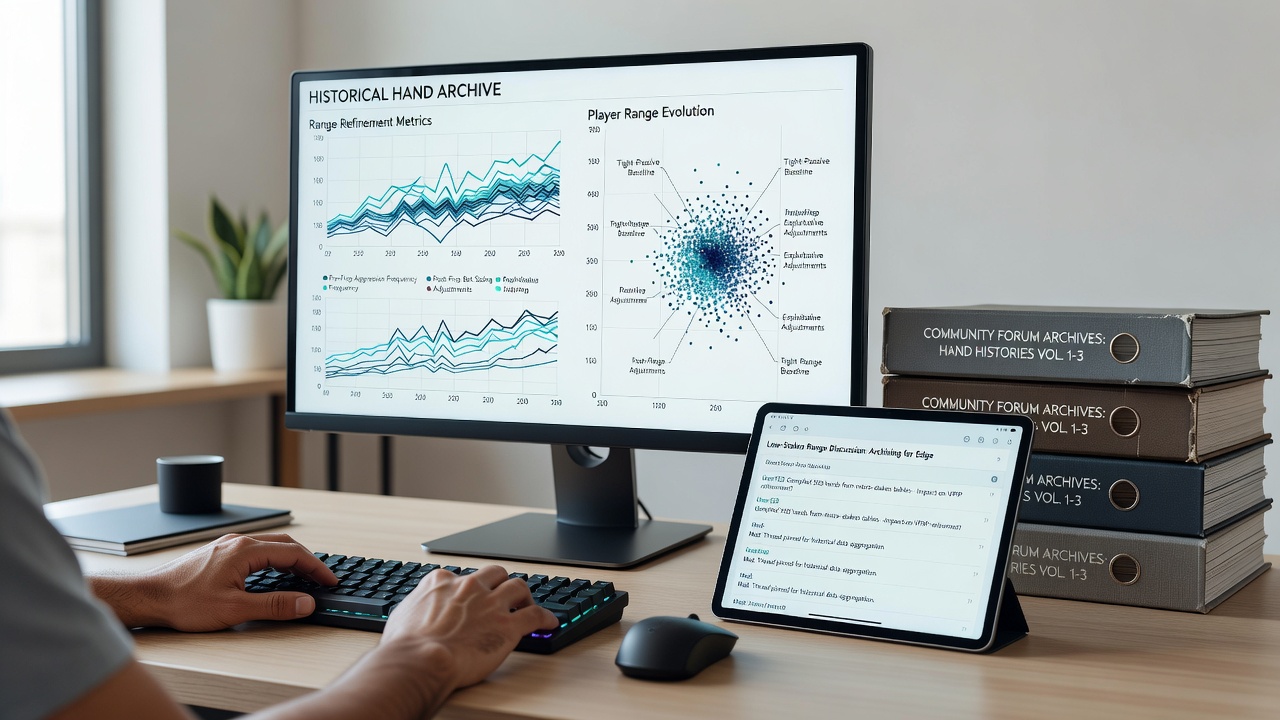
Community forums have collected millions of hand histories from low-stakes online tables since the early days of digital poker, and these archives continue to shape how recreational players adjust their ranges today. Data from public threads on established sites shows players uploading hands from 2015 through mid-2026, creating searchable databases that reveal betting patterns at micro and small stakes. Observers note that low-stakes regulars often reference these older sessions when updating preflop charts or postflop lines, because the volume of recorded action provides statistical baselines that newer tracking software alone cannot match.
The Mechanics of Forum-Based Hand Archiving
Players upload hand histories to dedicated subforums where moderators categorize them by stake level, position, and street of action, then tag them for quick searches. Threads dating back more than a decade remain active because contributors keep adding new examples that either confirm or challenge older conclusions about range construction. Researchers at the University of Toronto documented how these archives grow through voluntary submissions, with low-stakes sections receiving the highest volume of posts because the player pool turns over frequently and leaves behind consistent data trails.
Archivists on major platforms maintain spreadsheets that aggregate thousands of sample hands, allowing users to filter for specific scenarios such as button opens facing big-blind three-bets or small-blind defenses against cutoff raises. This organization turns raw histories into practical tools that players consult before adjusting their own ranges during study sessions.
Range Refinement Through Historical Comparison
Low-stakes digital players frequently compare current population tendencies against archived hands to identify which parts of their ranges have become exploitable. Figures from forum datasets indicate that opening ranges at 10nl and 25nl have tightened by roughly four percent since 2020, a shift visible when contributors overlay older hand samples against recent ones. Those who study the archives report that they tighten their continuation-bet frequencies on certain board textures after noticing that historical data shows opponents folding less often to delayed aggression.
One documented case involved a group of regulars who compiled 4,800 hands from 2018-2022 and discovered that low-stakes players defended their big blinds with wider ranges than contemporary solvers suggested. The finding prompted several participants to expand their own three-bet sizes in position while reducing bluff frequency out of position, adjustments that appeared in subsequent hand uploads within the same thread.
Integration With Modern Study Tools
Forum archives serve as supplementary datasets that players import into equity calculators and solver interfaces. Contributors often export filtered hand collections and run them through custom scripts that highlight range discrepancies across different time periods. Data compiled through July 2026 shows that low-stakes grinders who cross-reference forum archives with personal database reviews make range adjustments at a higher rate than those who rely solely on HUD statistics.
Industry reports from the Nevada Gaming Control Board note that online traffic at micro stakes has remained steady, which sustains the supply of new hands entering public archives. This continuous inflow keeps the historical record relevant even as player pools evolve and software improves.
Challenges in Maintaining Accurate Archives
Forum moderators must verify hand authenticity because fabricated histories can distort range conclusions. Established communities require users to post hand histories in standardized formats that include full action sequences and stack sizes, reducing the chance of selective editing. Academic reviews of poker data practices highlight that transparent sourcing improves the reliability of collective analysis, which in turn supports more precise range work for participants who treat the archives as reference material.
Despite these safeguards, gaps still appear when certain stake levels or game types receive fewer uploads, leaving some scenarios underrepresented in the historical record. Contributors address this by cross-posting notable hands across multiple forums, increasing the chance that rare spots accumulate enough samples for meaningful comparison.
Conclusion
Community forums continue to function as living repositories where low-stakes players access historical hand data to refine opening ranges, continuation-bet strategies, and river bluff frequencies. The practice relies on consistent contributions, standardized formatting, and cross-referencing with modern tools rather than any single source. As long as online traffic at these stakes persists, the archives will keep expanding and supplying the concrete examples that support incremental adjustments to preflop and postflop ranges.